Tuesday, 22 October 2019

Data and Dashboards and Decisions – Oh My!

EDITOR’S NOTE:  Because extended enterprise learning involves multiple disciplines, we sometimes ask other experts to share their insights with our readers. Today we feature advice about performance dashboards from Laura Patterson, President of VisionEdge Marketing.

Laura is widely recognized as an authority in marketing measurement and performance, content management, marketing operations and data analytics. Her guidance is also useful for business-minded learning professionals.


Data Dashboards Everywhere!

These days, nearly every business technology platform offers some type of performance report or dashboard capability. We now expect one-click access to data from tools we use for email campaigns, social media and web content management. And we expect no less from more sophisticated systems that drive marketing automation and customer relationship management.

Although these dashboards offer easy access to information, it’s important to remember their limits. For example, charts typically reflect only the data collected with each platform. But our goals are usually more expansive. We want to understand how marketing activities work together to impact business outcomes such as category ownership or comparative growth rates.

Does Your Dashboard Separate Signal From Noise?

The most effective dashboards focus on highly relevant information that demonstrates business impact and facilitates strategic decision-making. This requires us to gather and integrate data from multiple sources.

Sounds straightforward enough. But the trick in building and leveraging this type of dashboard is the ability to identify the most meaningful data and make sense of it. And that depends on how well you separate the signal from the noise.

This signal-to-noise (SNR) concept is a ratio used in science and engineering to measure the strength of a relevant signal to irrelevant background noise. When SNR is low, the signal (in this case, salient performance information) gets lost in the noise (all the background data). Conversely, as SNR increases, the signal becomes more clear.

Why Does Signal-to-Noise Ratio Matter?

Because I’ve spent a great deal of my career among engineers, I learned the importance of separating relevant versus irrelevant data. And when we apply this signal-to-noise ratio idea to marketing dashboards, they become more useful.

Think of it this way:  When your dashboard is overloaded with data, your ability to find and focus on meaningful insights can be obscured by random superfluous or irrelevant information. Learning how to distinguish important data can help you measure performance more effectively and help your organization make actionable decisions with greater confidence.

Before we explore how to construct a meaningful marketing dashboard, let’s explore how to increase your SNR ratio.

Why Quality Data Leads to Terrific Dashboards
RSVP FOR THE OCTOBER WEBINAR!

Too much data is one of the primary culprits of noise. But simply reducing the total volume of underlying data doesn’t necessarily produce a higher-quality dashboard.

No matter how much data you process, you need to make sure you have the right data.

This is why it is important to remember that any dashboard – for marketing or any other function – must answer the proverbial question, “So what?”

If it doesn’t facilitate an action or a decision, what is its purpose?

An Everyday Example: Your Car

Think about the dashboard of your car. Those visual analytics are based on a lot of data, but each widget is a key performance indicator (KPI) that serves a specific, important purpose:

  • The speedometer helps you decide if you’re driving within the legal limit.
  • The fuel gauge helps you decide if you have enough fuel to reach your destination.
  • The average-miles-per-gallon tracker helps you decide if your car is operating as efficiently as you’d like.

An effective marketing dashboard plays a similar role. It should include indicators that help decision-makers address key performance questions. For example:

  • Which business processes are affected by marketing, and to what degree?
  • Are you meeting specific performance targets?
  • What is or isn’t working? What tactical adjustments are recommended (if any)?
  • What strategic decisions should be made regarding customers, products and competitors?
  • Where risks are emerging, and what’s the severity of those risks?

This is the first step in creating a high signal-to-noise dashboard. Determine the decisions and actions that matter most to your business. Then select ONLY relevant dashboard indicators.

How to Improve Dashboard Data

We’re bombarded with so many real-time dashboard metrics, it’s easy to be sucked-in by the sheer volume and flow of dynamic activity data. Perhaps that’s why professionals spend a tremendous amount of time and energy monitoring website traffic and social media activity as it occurs.

However, real-time dashboards can be harmful because they tend to increase the overall noise level, and cause knee-jerk reactions to data that hasn’t been contextualized. To minimize these issues, try these techniques:

1) Expand Time Intervals

Tracking and reporting time series data over longer periods (months instead of days, for example) can help you avoid short-term noise dynamics, so you can identify the most salient data patterns.

This can also help you identify acceptable measurement parameters and define appropriate “exception alert” thresholds – the same way your car dashboard is designed to alert you when fuel dips below a specific level.

2) Smooth Your Data
RSVP FOR THE LIVE NOVEMBER WEBINAR!

Data smoothing is particularly important. This makes it easier to identify core patterns, so you can begin to isolate issues and analyze underlying drivers.

A variety of sophisticated statistical techniques can help you with data smoothing. However, simply calculating a moving average over multiple equivalent intervals is fairly easy and usually reasonably effective.

For example, it may be helpful to track growth in customers and purchase volume with a one-year monthly trailing moving average. This kind of time series analysis provides more meaningful information than actual monthly values, especially when activity is characterized by frequent peaks and valleys that reflect seasonal fluctuations or other factors.

Averaging data over time also helps reduce noise when your data involves win/loss ratios, net new opportunities and other pipeline metrics that can change dramatically from week-to-week or month-to-month.

3) Combine Indicators

Another way to reduce noise is by combining multiple indicators. This can be effective even when measures represent somewhat different concepts. For instance, you may want to combine measures of actual spend with cost-per-unit (such as cost-per-lead, cost-per-acquisition, cost-to-serve and so forth).

Because these indicators are conceptually different, they will track differently, even if they’re measured perfectly. But by combining them, you can build a more complete picture of the fundamental “value for money” trend.

In addition, combining different measures of the same concept can help improve the accuracy of your estimate.

Closing Notes

Focusing only on relevant data will ensure that you get the most value out of any performance dashboard. For more ideas about how to improve your marketing measurement methods, see related posts and other resources on the VisionEdge website.


EDITOR’S NOTE: This post has been adapted, with permission, from a post published on the VisionEdge Marketing blog.


Want to Learn More? Replay our webinar:

Bridging the Learning Analytics Gap: How Guided Insights Lead to Better Results

REPLAY THE WEBINAR!

Even with cutting-edge measurement tools, many struggle to find enough time and expertise to generate useful learning insights. How can you bridge this critical analytics gap?

Join John Leh, CEO and Lead Analyst at Talented Learning, and Tamer Ali, Co-Founder and Director at Authentic Learning Labs. You’ll discover:

  • Top learning analytics challenges
  • How AI-driven data visualization tools are transforming learning insights
  • How to define and interpret relevant metrics
  • Practical examples of AI-based analytics in action
  • How to build a convincing case for guided analytics

REPLAY THE WEBINAR NOW!


Need Proven LMS Selection Guidance?

Looking for a learning platform that truly fits your organization’s needs?  We’re here to help!  Submit the form below to schedule a free preliminary consultation at your convenience.

The post Data and Dashboards and Decisions – Oh My! appeared first on Talented Learning.


Data and Dashboards and Decisions – Oh My! original post at Talented Learning

Tuesday, 15 October 2019

Podcast 28: How Tasty Is Your Product Training? – With Mike Martin, CLO of SAP Litmos

WELCOME TO EPISODE 28 OF THE TALENTED LEARNING SHOW

To learn more about this podcast series or to see the full collection of episodes visit The Talented Learning Show main page.


EPISODE 28 – TOPIC SUMMARY AND GUEST:

Today I have the pleasure of talking with someone who is both an experienced learning practitioner and an instructional technology innovator. Our guest is Mike Martin, Chief Learning Officer at SAP Litmos, a leading training platform for customer-focused companies.

Because Mike’s background is so diverse and his responsibilities span multiple audiences, we could discuss on all kinds of topics. But today, I want to focus specifically on why product training matters and how to deliver stellar training across the extended enterprise.


KEY TAKEAWAYS:

  • For example, when product training is an employee imperative, everyone in the organization becomes aligned with the customer experience.
  • Also, for new customers, early access to training makes onboarding more efficient and successful. This adds value and differentiates a product beyond core features and functionality.


Q&A HIGHLIGHTS:

Welcome, Mike! Your background as a learning professional is rich and varied. What led you to this current role as CLO at SAP Litmos?

It was an interesting path. It actually started when I was a teenager, working at a summer camp. One year, they built a ropes course, and I became a facilitator.

I fell in love with the idea that we could train people to try things they totally feared, and we could have conversations based on questions like, “What has this experience helped you learn about yourself?”

Nice.

From the first day I was hooked, so I gained a lot of experience in outdoor team-building and education. But I also wanted academic knowledge of how adults learn. So I got a master’s degree in instructional design and technology. And that led to roles in the corporate world.

In particular, over about 5 years or so, I built the training department from scratch at Build.com. That’s where I met Litmos in 2011, and I remained a customer until I left in 2016.

That’s neat…

RSVP FOR THE OCTOBER WEBINAR!

It was a really great experience, so I stayed connected with Litmos. One of the things I loved most is that they have great people behind the product.

I really appreciated their enthusiasm and their moxie. And if I was going to hitch my wagon to any vendor, I wanted it to be an organization like that.

And then they hired you?

They brought me in to create tools and processes to train our customers, partners, resellers and anyone else who wants to know how to use Litmos and why it’s such a great investment. And I’ve been here ever since.

It’s unusual for an LMS company to have a CLO, but Litmos does. Why is that?

I think Litmos realizes it’s not just a technology company. It’s a learning company.

We need to be doing everything we ask of our customers. That means we need to “drink our own Kool-Aid” and use our product just like they do.

What exactly does product training look like at Litmos?

It centers around what we call the Dojo. It’s a self-paced online product training platform for everybody.

Our customers, our resellers, our partners and even our internal staff learn how to use our LMS by use the same Dojo instance of Litmos. This includes how-tos for all of the features, functionalities and other things they need to understand the product.

Interesting…

So with a CLO behind the Dojo, there’s one person who’s responsible for training our staff in a way that’s really consistent with the training our customers get. This way, we can be sure that everyone is seeing Litmos from a similar perspective and is speaking the same language.

That’s really important. Because, let’s say a service rep gets on the phone with a customer who says, “Hey, I did this training in the Dojo and it said xyz.”

Our rep will be able to say, “Yeah, I took that same training, and I thought the same thing.” Or, “I know exactly where you’re coming from.”

That’s a great way to be sure your team is aligned with a customer’s reality.

Right. The CLO position was intended as a sort of unifying position.

Also, I imagine you connect with CLOs all over the world who face the same challenges of serving internal and external audiences.

Exactly. I love working with customers to understand what’s really going on in their world. Plus, because I bring background from different walks of life, I have an opportunity to look ahead and help figure out next-generation capabilities we should pursue.

What are your customer learning objectives with the Dojo? How broad is your scope?

It’s been an incredible journey. At the end of 2016, we dove into the Dojo to understand what we had and where we needed to be. At that point, there wasn’t much in there.

There were a few courses and traffic was pretty minimal. At that time, there were fewer than 1000 users. Now, in just a few years, the Dojo attracts more than 20,000 active users, and those numbers keep growing.

Great momentum!

Just like any good learning designer, my goals were to make sure that anyone taking our product training can become competent and confident in their ability to do whatever they want to accomplish.

In this case, that starts with enabling people to navigate through the Litmos tool and set it up the way they need to, so it works for their business use case. It’s a self-paced method that lets people jump in and take the type of training they want at any point, at any time.

Smart approach…

REPLAY THIS WEBINAR NOW!

We also want this learning process to grow with them, organically. That means each quarter when we roll-out new product updates, we also add new courses.

This gives everyone access to a single source of truth that helps them understand how to use the tool and make the most of it as it evolves.

Makes sense.

Plus, we set-up the Dojo to deliver training in several different forms. We want to offer product training at every level, so no matter what the situation, a customer can gain competence and confidence.

This helps them get excited about the product and gives them a reason to keep coming back.

For example, a customer may say, “I only have five minutes. What can I learn about dashboards in that timeframe?” So we created a set of courses that are just that. They’re 3-5 minutes and they give you a 75% flyover. Those are our “Fast Track” courses.

In addition, we offer a series of deep-dive learning paths we tie to “belts” – White Belt, Green Belt and Black Belt.

Interesting. I haven’t heard this concept expressed before in those terms. But we often see the need for just-in-time instruction versus formal certification tracks.

Our goal is to never leave anybody wanting. Many people just want a quick how-to or a down-and-dirty overview. They’re Fast Track candidates. While others want to learn absolutely everything there is to know. Those folks can go through the belts at their own pace.

So tell me – how do you create and manage all that content? Let’s start with Fast Track content.

Well, we want the Fast Track experience to be exciting and hold attention, so everything is fast and fun. All of this is in MPEG4 format. We use Adobe After Effects and Premiere with animations and voice-overs.

We incorporate a lot of humor into this content because we know that the brain craves novelty. People will tune-in, stay focused and remember something that’s a little unexpected and makes them laugh.

With Fast Track content, we’re not trying to teach people everything. It’s just a whirlwind introduction. Then, if they want to know what every lever and button does, we steer them towards the belt courses.

Great. And how do you approach the belt courses?

These courses require us to go deeper into more traditional instructional design. So we use Articulate Rise and go SCORM for a couple of reasons:

  1. We can produce content in 1/3 of the time. It’s good enough because you can paint by numbers and they give you various blocks, so it works really well.
  2. It’s natively responsive for any device.
  3. It’s super fast.
  4. I really like the layout.

We integrate some videos and walk-throughs using Camtasia. But we’ll do screen recordings that illustrate a specific task in a quick 15-second clip or longer, if needed.

So, when people earn a belt, is that just for internal use? Or can they share that distinction to demonstrate value within your broader business ecosystem?

Our tool lets people share their badges and certifications outside of the LMS on Twitter and other public channels. We’ve gamified the whole thing, so we see that all the time. It’s great.

Excellent…

I think of product training like making a stew. If I just throw meat and potatoes into the pot, it will nourish people. And if I add carrots, that meal may taste better.

But if I start tossing-in some spices – a little salt, a little garlic, a little paprika – all of a sudden, people start saying, “Wow, this tastes amazing!”

It’s those little things that make the biggest difference. Just those little spices. In a learning environment, that could be something as simple as a graphic that winks at you at the ideal moment. Something that’s a bit out-of-the-ordinary but really thoughtful.

Sure. So what kind of impact are you seeing with this new approach to product training?

Just putting some time and effort into offering product training that fits customer interests has boosted engagement 100-fold.

Wow. That’s fantastic.

We give a lot of credit to our customers for telling us what they want. Much of what we do comes from their suggestions. They’ll say, “Look, it would be great if…” and that’s an opportunity for us to respond.

So how different is the content you deliver to internal versus external audiences? And how do you deal with that?

REPLAY THIS WEBINAR NOW!

Since we use the same instance of our LMS for all audiences, we need a line between what internal employees see and others don’t.

But that’s the beauty of the Litmos product. It’s built so you can provide distinct experiences to different audiences – whether that’s segmented by team, or brand or other categories.

We can even do that automatically, through assign rules and other things, so you can give people exactly what they need when they need it – while omitting other stuff that might confuse them. All of these things are built-in to support various use cases.

Cool. And how do you do that with your audiences?

We actually have a treasure trove of content – with Litmos Heroes content and all the compliance content we’ve created. We can tap into that for our employees as well as customers.

Keeping that separate in the system is pretty simple, but we can put all the courses in one place, rather than having to keep two different instances open and up-to-speed.

And it’s not all just product knowledge and compliance. We’re also starting to move into best-practice knowledge.

Mm-hmm. What’s your goal with that?

Well, as you know, instructional designers are asked to do many things. We write content, do graphic design, develop the program, drive reporting and assessments. These are all disciplines that people can study in school and pursue as a professional specialty. But we often need to do it all.

Yep – a master of all trades.

Right. But many people can’t be experts at everything. So we want to make it easier for those people to create awesome learning content that doesn’t suck.

In short, we’re trying to get into more best-practice stuff that helps learning professionals succeed in their roles. It’s not just about LMS features or functionality or compliance.

Great. I’ll be interested to hear how that progresses. So how do you measure the effectiveness of product training?

We use the LMS, itself, to measure rudimentary things, such as who takes courses. But at the end of the day, we want to know if training is adding value. Can customers do things better, faster, stronger? Or is change happening?

So, for example, our metrics include customer satisfaction. We also look at how many support tickets are submitted for different types of product-related issues. So, if there’s a reduction in the number of people who don’t ask us how to do something, it’s an indicator that training is making an impact.

We’re also looking at reducing the amount of time required for kickoff calls, and how well the Dojo prepares customers for those calls, so they can ask smarter questions. After new customers get some of the basics out-of-the-way, they can have better, deeper conversations. So we want the Dojo to help move that meter.

Great! Often, software companies rely on customers to figure things out for themselves. So putting training tools and best practices in their hands as early as possible can really differentiate your brand…

Right.

Okay, so let’s look ahead. Over the next 12-18 months, where do you want to add more of the “spice” you mentioned before?…

…FOR COMPLETE ANSWERS TO THIS QUESTION AND MORE, LISTEN TO THE FULL PODCAST NOW!


WANT TO LEARN MORE? JOIN OUR OCTOBER WEBINAR

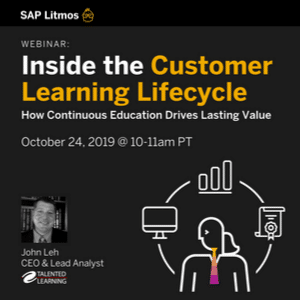
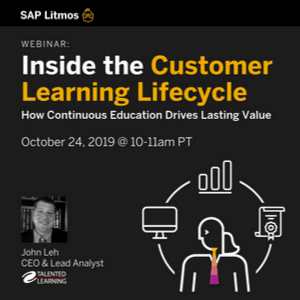
Inside the Customer Learning Lifecycle

RSVP FOR THE OCTOBER WEBINAR NOW!

How can you drive lasting business value through continuous customer education? 

Find out on October 24th from 1-2pm ET as John Leh, CEO and Lead Analyst at Talented Learning, and Mike Martin, CLO at SAP Litmos examine what works – and why. You’ll learn:

  • How to prioritize fluid customer education needs
  • How to build a convincing business case
  • Guidelines for choosing effective tools and technologies
  • Tips for quick deployment and continuous improvement
  • Successful “lifecycle” content strategies
  • Metrics to evaluate program impact over time

REGISTER NOW!


Need Proven LMS Selection Guidance?

Looking for a learning platform that truly fits your organization’s needs?  We’re here to help!  Submit the form below to schedule a free preliminary consultation at your convenience.

The post Podcast 28: How Tasty Is Your Product Training? – With Mike Martin, CLO of SAP Litmos appeared first on Talented Learning.


Podcast 28: How Tasty Is Your Product Training? – With Mike Martin, CLO of SAP Litmos original post at Talented Learning

Tuesday, 8 October 2019

Extended Enterprise LMS Buyers Companion – 2019 Edition

If you’re familiar with Talented Learning, you know we’re fiercely independent consultants focused on one goal – to help you choose the best extended enterprise LMS for your needs.

The “Extended Enterprise” Worldview

What exactly do we mean by the term “extended enterprise”? Think of learning programs that reach beyond employees. For instance, in the corporate world, that could include customers, prospects, channel partners, franchisees, contractors, suppliers and perhaps employees, too.

Extended enterprise LMS solutions serve external audiences as well as employees

EXTENDED ENTERPRISE LMS AUDIENCES

However, serving diverse audiences can be tricky. And with more than 1000 enterprise-class learning systems available, finding the right solution is more challenging than ever.

When faced with so much complexity, how can you choose a solution with confidence?

Recently, we helped association leaders answer that question with a special “LMS Buyers Companion” post, filled with free resources for continuing education providers. Its popularity spread like wildfire.

So now we’re publishing a similar guide just for corporate learning decision makers. We invite you to bookmark this page as a handy virtual reference. But if you need direct guidance at any point, feel free to contact me to request a preliminary phone consultation at your convenience.

Inside the “Extended Enterprise LMS Buyers Companion”

This free collection of LMS selection resources includes:

  • PODCASTS – “Hot topic” interviews with business-minded learning practitioners and innovators on The Talented Learning Show
  • BLOG POSTS – Independent advice, straight from our analysts and other experts
  • WEBINARS – In-depth sessions focused on key extended enterprise LMS issues and related business strategies
  • WHITEPAPERS – Relevant insights you can download and read anytime
  • AWARDS – Our choices for this year’s Top Extended Enterprise Learning Systems – including our rationale for each selection

PODCASTS

Read highlights and listen to complete 30-minute interviews from The Talented Learning Show:

RSVP FOR OUR LIVE OCTOBER WEBINAR!

1) Why is customer education gaining momentum?
Customer Education 101 – With Dave Derington of Outreach

2) How do channel education networks drive revenue?
Extended Channel Training – With Doug Gastich of BlueVolt

3) How does a modern LMS support franchise success?
The Inside Scoop on Global Franchise Training – With Chris Shanks of Dairy Queen

4) How can training providers share online content more broadly?
Extending Learning Content Availability – With Troy Gorostiza of Course Container

5) Why pick open source as an extended enterprise learning foundation?
Open Source LMS Advantages – With Lars Hyland of Totara

6) How do subscription businesses help customers succeed?
SaaS Customer Success – With Samma Hafeez of Thought Industries

7) How do brands drive training engagement among franchisees?
Franchise Training Adoption – With Trista Kimber of Hooters

8) How is xAPI transforming enterprise learning analytics?
Business Benefits of xAPI – With Mike Rustici of Watershed


BLOG POSTS

Independent advice from our analysts and expert guest authors:

1) Top learning systems trends: 2019 extended enterprise market guide
Which technology and business factors are shaping the extended enterprise LMS market? Check key issues and opportunities…

2) Starting a customer education program: The inside story
What does effective customer training look like? Prepare for success with advice from customer education expert Adam Avramescu of Slack…

3) How do you find an LMS that nails extended enterprise learning?
What’s the best way to select a learning system that truly fits your extended enterprise needs? Walk through a real-world scenario…

4) What to expect in a partner-focused LMS
What features should you look for in a channel learning system? Here’s what you need to run a successful sales partner training program…

5) Marketing never ends: How does product education help?
Converting leads to customers is only part of the modern marketing mission. Product education is also key. Intercom’s customer engagement leader explains why…

6) Should you use an employee LMS for extended enterprise learning in 2019 and beyond?
The top question we hear as LMS selection consultants: “Should we use our employee LMS for external learning programs?” Here’s how we respond…

7) Customer engagement metrics: What marketers can teach learning pros
What kind of business impact should you expect from customer engagement? Marketing consultant Laura Patterson outlines 3 key success metrics…

8) What’s the smartest path to the right LMS? Ask a learning tech analyst
What should you consider when determining your extended enterprise LMS needs? This Q&A addresses common questions…

9) Extended enterprise learning systems shift into high gear
Why are extended enterprise learning systems gaining ground so quickly? These factors are driving demand…

10) Is your business data worth keeping?
Business data is vital. But are you collecting too much data for your own good? Digital transformation consultant Daniel Newman weighs in…

11) Should you use an RFP when choosing an LMS?
Requests for proposal are highly controversial. Some love them. Others hate them. But here’s why you’ll probably want to use an RFP the next time you select a learning system…

12) Define your LMS requirements like a pro
Learn how to outline your needs so you’ll find the best solution at the best price…


WEBINARS

Register for any one of these free sessions, and you’ll gain access to our entire library of webinars and other resources at The Talented Learning Center!

1) How does partner education lift business performance for all?
Roundtable with Gary Brashear, VP Marketing, BlueVolt
Laura Pierce, Marketing Communications Director at Shurtape Technologies

2) How does product training accelerate customer time-to-value?
Featuring Samma Hafeez, VP of Customer Success, Thought Industries

3) What steps lead to extended enterprise LMS success?
Join me one-on-one for this special how-to session

4) How can you drive learning in hard-to-reach places?
Roundtable with Bill Mastin, EVP of Sales & Alliances, PeopleFluent
Carrie Hancock, Director of Sales, PeopleFluent
Ross Coxon, Director of Learning Collaborative, Humentum

5) What’s the anatomy of a high-impact learning experience?
Roundtable with Paul Morton, Regional Director, CrossKnowledge
Anja Emonds, Research Manager, CrossKnowledge Academy

6) How does extended enterprise training drive growth?
Roundtable with Lars Hyland, CLO, Totara Learning
Charles Ackerman, Sr. Solutions Strategist, Remote-Learner
Darren LaRue, Product Training Specialist, JLG Industries

7) What techniques engage external audiences in learning?
Featuring Kevin Hanegan, CLO at Qlik


WHITEPAPERS

Download insights from our analysts – free when you register at the Talented Learning Center:

1) Connecting Training to Franchise Success

2) Visualizing Learning Impact: How Can Analytics Connect the Dots?


AWARDS

Which corporate extended enterprise learning systems stand out from the rest? Learn about our 28 choices for 2019 and why we recommend them. For the full story, see our awards analysis: Talented Learning LMS Awards – Corporate Extended Enterprise Systems

WINNERS 2019

READ THE FULL AWARDS POST

BlueVolt
Community Brands Crowd Wisdom
Cornerstone OnDemand
CrossKnowledge
Docebo
eLogic Learning
Learndot by ServiceRocket
LearnUpon
NetExam
Northpass
OnPoint Digital
SAP Litmos
Skilljar
Thought Industries
Totara

FINALISTS 2019

Absorb
Accord LMS
Degreed
EdCast
LogicBay
MATRIX LMS
PeopleFluent NetDimensions
Saba
Schoox
TalentLMS
Together JAZZ by Skylab Italia
UpsideLMS


WANT TO LEARN MORE? JOIN THIS ON-DEMAND WEBINAR!

LMS Selection Step-by-Step

REPLAY THIS WEBINAR

With hundreds of learning systems available today, finding the right LMS for your unique extended enterprise needs can be tricky. What exactly should you do to choose the best solution?

Walk step-by-step through a real-world example with John Leh, CEO and Lead Analyst at Talented Learning. You’ll learn:

  • How to develop a relevant business case and success metrics
  • Methods for researching and defining use cases and requirements
  • When to issue an RFP (or not)
  • Tips for creating a viable LMS shortlist
  • How to make the most of vendor demos and proof-of-concept projects

REPLAY THE WEBINAR NOW!


Still confused about which LMS is best for your association’s needs? I’m here to help. Feel free to contact me anytime to schedule a preliminary phone consultation:

The post Extended Enterprise LMS Buyers Companion – 2019 Edition appeared first on Talented Learning.


Extended Enterprise LMS Buyers Companion – 2019 Edition original post at Talented Learning

Wednesday, 2 October 2019

Podcast 27: What Makes Microlearning Work? – With Karl Kapp

WELCOME TO EPISODE 27 OF THE TALENTED LEARNING SHOW

To learn more about this podcast series or to see the full collection of episodes visit The Talented Learning Show main page.


EPISODE 27 – TOPIC SUMMARY AND GUEST:

Microlearning. I hear about it on a daily basis. But when I ask clients to define it their own words, the answers are all over the board.

It’s time for clarity and consensus. That’s why I’m glad that Dr. Karl Kapp and Dr. Robyn Defelice are tackling this topic in their new book, “Microlearning: Short and Sweet.”

Today, I’m fortunate to talk with Karl as part of a virtual book tour that he and Robyn are conducting. If you’re a regular listener, you’ll recall that Karl joined us nearly two years ago to discuss gamification in business applications. That episode is now the most popular interview in our show’s history. And I bet this one will be just as well-received.


KEY TAKEAWAYS:

  • Microlearning is a deceptively simple concept. Perhaps that’s why it inspires so many myths and misconceptions.
  • Effective microlearning is not just bite-sized content. Successful applications approach microlearning as a process.
  • Microlearning and gamification are related in several ways. It’s useful to consider how they can work together to improve learning outcomes.


Q&A HIGHLIGHTS:

Welcome back, Karl! It’s hard to believe that nearly 2 years have gone by since you were on our show for the first time.

Thanks, John. It’s good to be back.

Why did you decide to write this new book about microlearning?

Well, it’s important to recognize that people have less time available for learning. So there’s more interest in learning based on short pieces of information.

Many learning management systems are now mobile-enabled, so we can receive these pieces of information on our phones. But that raises some questions:

  • Exactly what kind of information should we send to a phone?
  • How often should we send it?
  • What’s useful?

BUY THE BOOK NOW AT AMAZON.COM

Right.

So microlearning is this concept of providing highly targeted information that covers one or two topics in a very short amount of time.

How do you define short?

There’s all kinds of talk about whether it’s 5 minutes or 15 minutes or whatever. We don’t define it by time. We just say short, targeted information that is delivered through your phone or desktop – whatever you prefer.

So if you’re a financial professional, maybe it’s a brief update about three of the latest accounting rule changes. Or if you’re an HR manager, maybe it’s a list of three ways you can be sure your organization is in compliance with overtime guidelines.

Makes sense…

This could be standalone information or how-to content. But “one-and-done” training doesn’t always work, so microlearning may also be integrated into a larger curriculum, where continual reinforcement is very effective.

For example, say you’re a subject matter expert who delivers free webinars. As a follow-up, you can offer monthly updates about each topic to webinar attendees who pay for an annual subscription.

This kind of reinforcement helps people focus and remember information. It also helps change their attitudes or behaviors related to that information.

So microlearning is less about making the content short and sweet – and more about proactively pushing it out and extending it over time?

It’s a little bit of both. There are many ways to classify microlearning, but we define six types. One is to push out content over time. Another is to refresh content over time.

You could also use one of many apps that support microlearning experiences. For example, we talk about a really cool app called Presentr. It’s designed to teach individuals how to give effective presentations.

You download the app and practice speaking. It tracks your pace, volume and other key factors, and recommends ways to improve. We classify this as a “coaching” type of microlearning.

Great idea!

Although there are many types of microlearning, here’s the common ground:  It’s an instructional unit that supports brief engagement in an activity that’s intentionally designed to elicit a specific outcome from participants. And we intentionally use the term “participant” rather than “learner.”

Why?

Well, the other day I had to change my bathroom shower head. So I pulled up a 5-minute how-to video on YouTube and followed step-by-step instructions.

Could I tell you those steps if you quizzed me today? Probably not. That video wasn’t designed for me to remember how to change a shower head forever.

But it helped me perform in the moment. And that fits into the microlearning realm.

You’re known as a gamification expert. Do you see overlap between gamification and microlearning?

First, while I’m known for games and gamification for learning, I’ve always been interested in learning in general – which is what got me into games and gamification. I’m deeply interested in the underlying mechanisms of how people gain new information and learn. That was one driver.

RSVP FOR THE OCTOBER WEBINAR!

Also, I’ve found that most gamification platforms use microlearning to deliver gamified content.

Let’s say you want to level-up to the top level in a gamified learning environment. To accomplish that, you need some kind of learning, training and behavioral change. And that happens through microlearning.

Got it…

But the content isn’t always effective. One vendor told me that their platform works well and everybody likes the gamification experience, but the content that clients create is sometimes off-base, so the learning experience doesn’t jell.

For example clients sometimes:

  • Cut a large course into smaller segments without making other adjustments
  • Focus on more than one objective
  • Create vague content
  • Mix multiple learning domains.

So platform providers are frustrated because they may have a great package, but they don’t have great content – and they’re not in control of that content.

Sounds frustrating.

Yes. And it makes a lot of sense. There are so many microlearning vendors that obviously have great technology. But I wonder about the design of a microlearning intervention. Because the rest doesn’t matter if the content isn’t designed effectively.

You can’t just copy and paste from a policies and procedures manual written in Microsoft Word and call that microlearning, right? You need some kind of design behind it.

Yep.

So that got me interested in how to help people design better instruction. How can we help them develop content that’s more meaningful, effective and comfortable for people who use it?

That’s how I got involved in microlearning. There was a big need and people were asking me how to do it.

For better results, should we tie microlearning to a skill and competency model?

It can be independent. But it’s usually most effective when you’re improving skills and competencies. Think of technology sales reps who need to remember product features or key elements of the sales model, itself.

They can listen to a brief audio clip that refreshes their memory when traveling to a sales call or waiting in the lobby. This quick bit of reinforcement helps them practice so they can bring this information to the sales conversation.

Is there a preferred medium for microlearning?

Video is definitely the hottest choice right now, for a variety of reasons. It’s great for conveying emotions. It’s also ideal for showing procedures step-by-step or transporting somebody to a specific location, like a technical environment.

Good point.

Animated explainer videos are also popular because you can share a lot of information in a short timeframe. In addition, podcasts are attractive because they’re relatively inexpensive to produce and they’re easy to edit into a short, focused package.

Text messages are another viable option. For example, an interesting study from India involves men whose glucose intolerance predisposed them to Type 2 diabetes. They participated in a microlearning intervention where they received text messages twice a day. This actually changed their behavior and helped a large proportion of them avoid Type 2 diabetes.

We also talk about infographics and flashcards as methodologies. There are digital flashcards as well as physical flashcards. You could even use a laminated job aid posted in a work cell.

So it doesn’t need to be digital?

Right. Microlearning doesn’t need to be driven by technology to make a difference.

People may think analog content isn’t cool, or you won’t get funding or participants won’t pay attention. But there’s actually a lot of value in analog instructions, job aids and performance assistance. All of these are forms of microlearning.

But video is getting most of the glory these days?

Yes. In part, video may be so attractive because people assume it’s easy. They may think they can simply set-up a camera and record someone talking. But that’s not necessarily effective.

You need to plan what you’ll say. You need to set it up. You need to reinforce it. You need to include on-screen interaction to illustrate what you’re talking about, so people get it. Many elements are involved.

The platform guy in me is wondering – is an LMS the best way to support microlearning?

Good question. With some older learning management systems, delivering small bits of content can be challenging.

It takes more time for people to get into an LMS and find what they need, so content isn’t available. Plus, a lot of content in legacy learning systems is too large or isn’t designed for microlearning consumption.

Of course as you know, there are many different LMS platforms. Some seamlessly support microlearning with no problem. But that’s not the only choice.

Now there are also gamification/microlearning platforms. These solutions have been developed specifically to provide frictionless content access in only one or two clicks.

BUY THE BOOK NOW AT THE ATD BOOKSTORE

So, would you recommend a specialized microlearning platform? Is that incremental to an LMS?

Often, gamification/microlearning platforms are separate. Some integrate with the LMS through deep linking or other methodologies. Some can sit right on top of the LMS. So there’s some integration with existing systems.

Okay…

But microlearning platforms often compete directly with the LMS. They usually include many LMS elements and they can be integrated right into your everyday workflow.

For example, imagine you’re a big-ticket retail sales rep. Recently, when completing several financing applications, you forgot to ask customers for their credit history.

Many microlearning platforms will notice that oversight. They’ll send you a message that points to a brief refresher video about when and how to request credit history. Or they’ll reach out with another quick intervention.

Interesting. So is the cost of developing microlearning less than other types of content?

Many people assume the word “micro” means lower cost. And that would be true if you could replace all the instruction in your company with just one piece of microlearning. But it doesn’t work that way.

Sometimes it can even cost a bit more. For instance, say you want to convert a one-hour compliance course to microlearning. You’ll probably need to think carefully about how to reshape each of those 60 minutes of instructional content to work more effectively in a microlearning context.

In other words, you can ramble on in a class or in an elearning module. But if you want to develop concise, high-impact content that changes behavior, you’ll need to give it a lot of thought and effort.

Sure…

However, once you get used to creating microlearning, you become more efficient. You start understanding almost intuitively what needs to be done. So over the long-haul, microlearning development costs may decrease.

That makes sense. So of course, in the extended enterprise world, we love measuring everything. How should we measure microlearning outcomes?…

…FOR COMPLETE ANSWERS TO THIS QUESTION AND MORE, LISTEN TO THE FULL PODCAST NOW!


BUY THE BOOK

Microlearning: Short and Sweet
is available now!
You can find it at Amazon.com or the ATD bookstore.


WANT TO LEARN MORE? JOIN OUR OCTOBER WEBINAR

Inside the Customer Learning Lifecycle

RSVP FOR THE OCTOBER WEBINAR NOW!

How can you drive lasting business value through continuous customer education? 

Find out on October 24th from 1-2pm ET as John Leh, CEO and Lead Analyst at Talented Learning, and Mike Martin, CLO at SAP Litmos examine what works – and why. You’ll learn:

  • How to prioritize fluid customer education needs
  • How to build a convincing business case
  • Guidelines for choosing effective tools and technologies
  • Tips for quick deployment and continuous improvement
  • Successful “lifecycle” content strategies
  • Metrics to evaluate program impact over time

REGISTER NOW!


Need Proven LMS Selection Guidance?

Looking for a learning platform that truly fits your organization’s needs?  We’re here to help!  Submit the form below to schedule a free preliminary consultation at your convenience.

The post Podcast 27: What Makes Microlearning Work? – With Karl Kapp appeared first on Talented Learning.


Podcast 27: What Makes Microlearning Work? – With Karl Kapp original post at Talented Learning

Wednesday, 25 September 2019

Marketing Never Ends – How Does Product Education Help?

EDITOR’S NOTE: Because extended enterprise learning involves multiple disciplines, we sometimes ask other experts to share their insights with our readers. Today we feature excellent customer education advice from Ruairi Galavan, Senior Manager of Customer Engagement at Intercom.


Every New Customer Counts

Customer acquisition is an obsession among startups. This is especially true for software-as-a-service (SaaS) companies, where each new customer adds revenue that can help your business grow.

No wonder many early-stage companies invest so heavily in marketing tactics to attract prospects and convince them to sign-up. Blog posts, paid advertising, white papers, hero videos, webinars, social media, specialized landing pages – the choices are endless.

If you’re lucky and your message resonates with your target market, sign-ups will soon start filling your pipeline. But does this mean you can just put your feet up and wait for subscription dollars to roll in?

Not so fast. Truth is, most of these new users will take one first look at your product. Then, for any number of reasons, they’ll leave and never come back.

Ouch. You just invested all sorts of time and money in marketing campaigns to get people in the door, only for them to question your product’s value and walk away.

What’s the Missing Link? Product Education

RSVP FOR THE OCTOBER WEBINAR!

If you don’t immediately show new sign-ups how they can succeed with your product, don’t be surprised if they move on.

And what about folks who do decide to stick around a bit longer? You’re on borrowed time with them, too.

Forget the adage, “If you build it, they will come.” Most startups have found that it simply doesn’t hold true. Neither does, “If they sign up, they will use it.” Instead, many sign-ups are just kicking the tires.

You can guide these people to early success, or you can turn a blind eye and let them figure it out for themselves. But I’ve found that even a modest product education effort can keep new customers from leaving.

How to Bootstrap Product Education

When I first joined Intercom, my role didn’t have an official “product education” title. Instead, I wore many hats. I wrote our product documents. I hosted how-to webinars. I created our help videos. I also managed our outbound messaging to customers.

The goal was simple – to create and distribute content that would help new customers get the best out of our product as quickly and easily as possible. As this function grew, I hired a team of customer-minded content specialists. They’re writers, video editors and educators. We call this group the Product Education team.

Simply put, we market our product to existing customers. And we measure our impact by analyzing specific customer behaviors:

  • Do we activate new sign-ups?
  • Do we expand their usage?
  • Do we retain these customers over time?

You might not think of product education as a traditional marketing activity. But SaaS marketers are quickly discovering that you ignore it at your peril.

Think of your solution as a luxury hotel. There’s no point building in a grand lobby with a shiny marble floor, only to have guests find a broken elevator and no stairs leading to their room!

5 Ways Product Education Helps Seal the Deal

Below are some tactics I used in the early days of Intercom, when the Product Education “team” was just me, and we fought for every new sign-up to become an active, loyal customer.

(NOTE: Nothing has changed about that product education goal. We still fight the good fight every single day.)

None of these tactics require a large, established team or a huge budget. They just require a genuine commitment to treating existing customers as well as you treat prospects.

1) Start with Minimum Viable Documentation

Don’t try to produce polished demonstration videos or invite hundreds of people to an orientation webinar until you clearly define the information new customers need most. This may seem obvious to you, but I guarantee that formalizing it in writing is worth the effort.

No matter what kind of product you sell, chances are you’ll need some kind of documentation to support it. For example, you’ll want to develop a written description of your product, the problems it helps people solve, how it works, how to get the most from it and how customers can find additional help when they need it.

REPLAY THE WEBINAR NOW!

Before you do anything else, capture the answers to these questions in as much detail as possible. Writing, rewriting and refining this information will bring clarity and focus to your ideas, advice, beliefs and tone.

Our team relies on this core messaging document when creating other materials like webinars and help videos.

It’s a common reference tool that we use time and time again to check how we defined things in the first place. In effect, it is our “knowledge base.”

2) Look Beyond Frequently Asked Questions (FAQs)

When you’re working at an early-stage startup with dozens of competing priorities, it’s tempting to publish the quickest, easiest type of documentation, just to keep your head above water. Usually, that means you’ll crank out a hasty “starter” collection of FAQs.

There’s nothing wrong with FAQs, per se. But if that’s your only documentation, you’re likely focusing on what to do when things go wrong.

Of course, you should answer common questions and be honest and upfront about your product’s shortcomings. But FAQs alone don’t inspire new, successful usage.

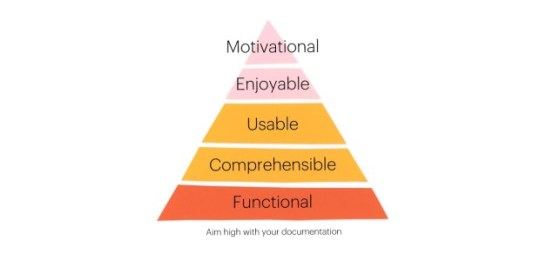
Your most effective content is likely to focus on turning trial-minded users into paying customers, and also turning paying customers into loyal, long-term advocates. It should not only be useful, coherent and relevant, but enjoyable and motivational, as well.

aim high with your documentation

3) Deliver White-Glove Treatment with Live Demos

“A demo allows the customer to see and feel how things will be better if they buy (and worse if they don’t).”
– Geoffrey James

When I started at Intercom, we made a point of inviting every single person who gave us their email address to a weekly live product demo. These were usually attended by 1-50 new customers.

Even if it meant getting up at 6 a.m. in Dublin to demo to three people in another time zone, we never missed a Wednesday demo. The benefits of this practice soon became clear – customers who attended were less likely to churn later.

In the early days, when your sign-ups are in the hundreds or low thousands, it’s worth showing each and every willing prospect and new customer a live demo that illustrates how your product can improve their lives. Unlike other content, live demos are extremely personal. They give attendees an opportunity to talk in real-time with the people behind your product and learn exactly why they should stick around.

This might not seem like a scalable activity, but you can automate lots of it. Just set-up a recurring automatic message to all your new sign-ups (for example, using a tool like Intercom) with a link to your registration page. Be sure to offer two or three dates/times, using tools like GoToWebinar, Zoom or On24. These tools are purpose-built for hosting recurring webinars.

Next, put together a script that demonstrates the value of your product in various use case scenarios. This isn’t just about features and functionality. In fact, the worst thing you can do is make customers sit through a parade of features that aren’t tied to problems they need to address.

The goal is to showcase how your product can improve your customers’ lives. The sooner you demonstrate this to new sign-ups, the more likely they’ll be to stay.

4) Offer Onboarding Screencasts

It’s frustrating to see just how many early-stage companies don’t showcase their product directly in their marketing materials. Maybe they think there’s not much to show.

Or maybe they think a 2-minute animated cartoon will somehow do a better job at helping prospects and customers understand what they’re buying.

Regardless, if you don’t set accurate expectations and help people see just how easy it is to move toward their goal, they’re likely to walk away wondering exactly what your product does.

Onboarding screencasts are a perfect way to show off your product, and set-up new users for success. (A screencast is a video recording of on-screen actions, accompanied by narration.)

REPLAY THIS WEBINAR NOW!

As soon as you offer this kind of product education, I guarantee that the business benefits will become clear. Your product launches should pack a bigger punch, adoption rates should increase, customer service queries should decrease and churn rates should improve.

Many people dismiss screencasting as too complex or time-consuming. It’s not. It’s something anyone can do. Don’t let the word “video” concern you. Trust me, if you’re working at a startup, screencasting is far from the most complicated or time-consuming thing you’ll do!

So jump right in and start playing with tools like Screenflow or Camtasia. The more you work with tools like these, the quicker and more proficient you’ll become. You’ll find that each screencast you produce is better than the last. I bet you’ll be surprised just how fast you can achieve high-quality results.

5) Take Time to Include Activation Webinars

Some customers will sign-up and stick around for a little while, but they’ll take little or no action. These folks are going to need extra encouragement to get up and running. For your business to survive, you’ll need to activate these fence-sitters, so they can start to see the value in using your product.

Here are several examples:

1)  For a dating app

•  Answer required profile questions
•  Upload at least one personal photo
•  Publish the completed profile

2) For a project management app

•  Create a project
•  Identify core steps/milestones
•  Share the project with team members

Once you’re confident about the actions that customers should take to see value in your product, invite those who haven’t taken these steps to a getting-started webinar. Your goal is to show them why it pays to move forward, and then how to take those first few important steps.

As with live demo invitations, you can automate much of the event planning and production process by combining several tools. All you need to do is show up each week and spend an hour moving your inactive customers into the active user category.

Product Education Litmus Test:  How Sexy Are You After the Sale?

Remember, your new sign-ups are more important than any would-be customer. These are the people who believed your promises, took a risk on your product and gave you their money. Now is not the time to give them half-baked learning materials like poorly crafted documentation – or worse, nothing at all.

All of your content is marketing – both before and after the sale. That means everything you create should be crafted with the intention of educating, helping, selling and retaining your customers. As Creating Passionate Users blogger and author Kathy Sierra says, it’s important to keep asking yourself: “Are you sexy after the sale?”


EDITOR’S NOTE:  This article has been adapted, with permission, from a post that appeared on the Intercom blog.


WANT TO LEARN MORE? JOIN OUR OCTOBER WEBINAR

Inside the Customer Learning Lifecycle

RSVP FOR THE OCTOBER WEBINAR NOW!

How can you drive lasting business value through continuous customer education? 

Find out on October 24th from 1-2pm ET as John Leh, CEO and Lead Analyst at Talented Learning, and Mike Martin, CLO at SAP Litmos examine what works – and why. You’ll learn:

  • How to prioritize fluid customer education needs
  • How to build a convincing business case
  • Guidelines for choosing effective tools and technologies
  • Tips for quick deployment and continuous improvement
  • Successful “lifecycle” content strategies
  • Metrics to evaluate program impact over time

REGISTER NOW!


Need Proven LMS Selection Guidance?

Looking for a learning platform that truly fits your organization’s needs?  We’re here to help!  Submit the form below to schedule a free preliminary consultation at your convenience.

The post Marketing Never Ends – How Does Product Education Help? appeared first on Talented Learning.


Marketing Never Ends – How Does Product Education Help? original post at Talented Learning